Feb 11, 2026
Should I Remodel My Kitchen Before Selling? Pros & ROI

Selling a home has a way of making even simple questions feel loaded.
The kitchen, especially, tends to sit right at the center of that tension. It’s expensive to change, highly visible to buyers, and often the first place people worry they’ve waited too long to update.
We’ll break down when remodeling your kitchen before selling makes sense, when it doesn’t, and how to think about ROI, scope, and buyer expectations.
Key Notes
Minor kitchen updates typically recoup far more value than full remodels before selling.
Buyer perception of the kitchen often drives price discounts or stronger offers.
Remodeling makes sense only when the kitchen clearly underperforms nearby listings.
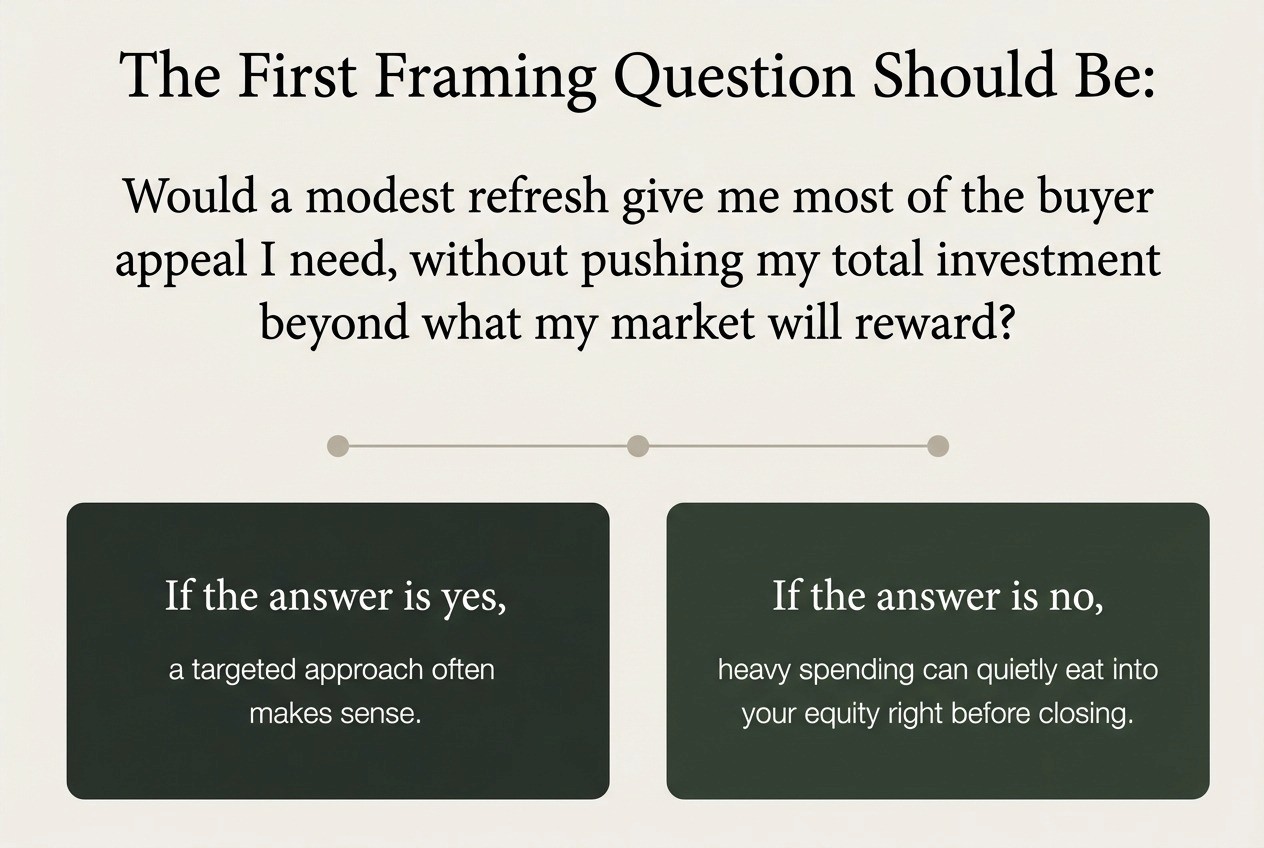
Start With The Real Question: Does The ROI Make Sense?
A kitchen remodel before selling is not about creating your dream space, but about whether the investment increases your sale price, speed, or buyer interest enough to justify the spend.
Most kitchen remodels do not return 100% of their cost at resale, especially when the home is sold shortly after the work is completed.
High-end or full gut remodels often recoup only about half of what is spent.
That does not mean they are bad projects. It just means they are usually better suited for homeowners who plan to enjoy them for years, not sellers preparing to list.
Minor, Cosmetic Updates
These tell a very different story.
They often deliver significantly stronger ROI because they improve buyer perception without overspending relative to the home’s value.
How Kitchen ROI Breaks Down
Minor Kitchen Updates & ROI
Minor kitchen projects tend to perform best financially when selling. These updates focus on appearance, basic functionality, and first impressions rather than structural change.
Typical minor updates include:
Painting or refacing cabinets
New countertops
Updated appliances
Fresh hardware and fixtures
Improved lighting
Costs for these projects commonly fall in the $20,000 to $30,000 range, depending on scope and materials. In many markets, sellers recoup roughly 75% to 96% of that investment in added home value.
The reason minor updates work so well is simple. They address what most buyers notice immediately, while avoiding customization that only appeals to a narrow audience.
Major Kitchen Remodels & ROI
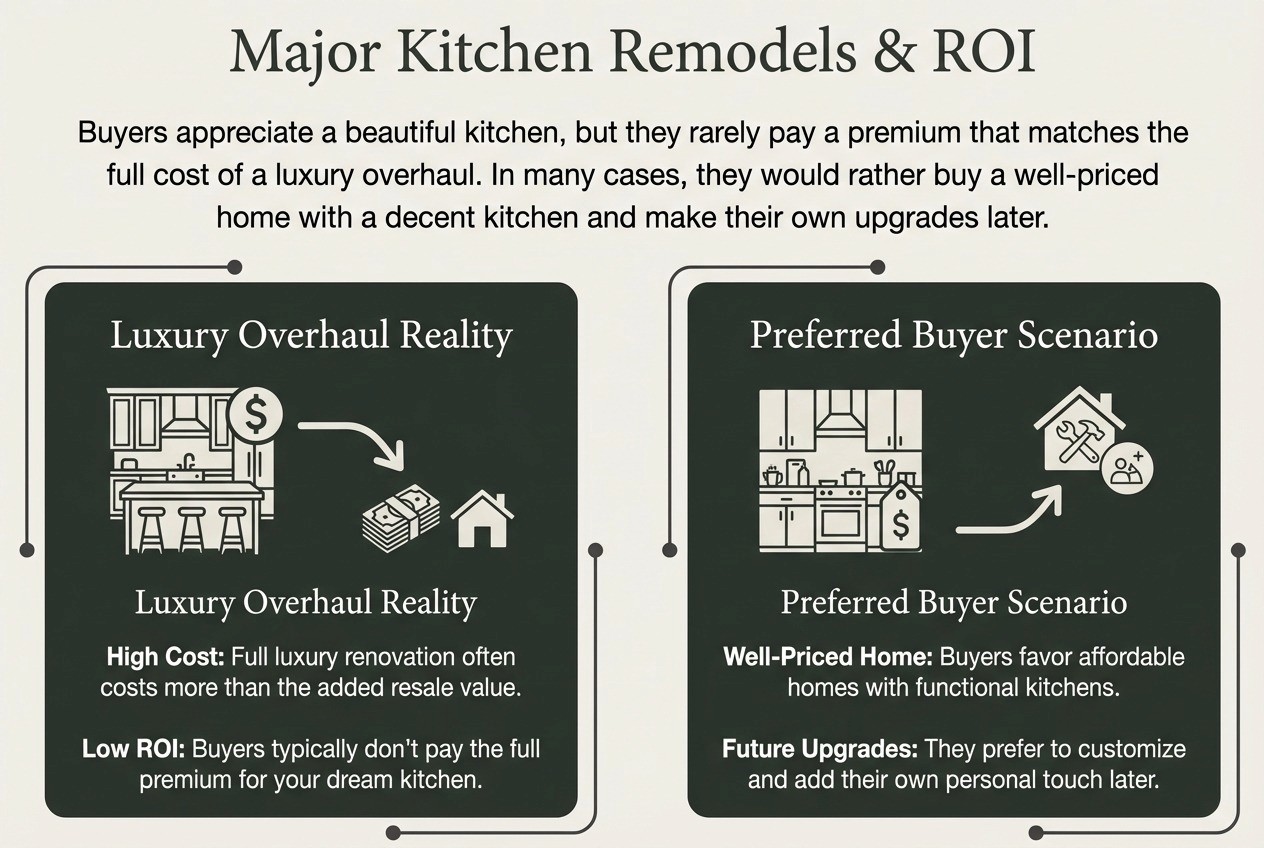
Major remodels tell a different story. These are full gut renovations with layout changes, custom cabinetry, premium appliances, and high-end finishes.
Costs often range from $60,000 to $150,000 or more.
At resale, these projects typically return around 35% to 60% of the investment. ROI drops even further when the finishes exceed neighborhood norms or lean heavily toward personal taste.
When Remodeling Before Selling Clearly Makes Sense
A kitchen remodel before selling is usually justified when the existing kitchen is actively hurting buyer interest.
This often applies when:
The kitchen is 15 to 20 years old or older
Cabinets are worn, failing, or poorly laid out
Appliances are outdated or no longer functioning well
Comparable homes nearby feature noticeably better kitchens
In mid- to high-end segments, updated kitchens are often standard.
If agents confirm that buyers expect a certain level of finish and will discount your home heavily without it, a targeted remodel can protect your sale price.
Want An Accurate Kitchen Remodel Quote?
We’ll define scope first so pricing is real.
When Remodeling Before Selling Does Not Make Sense
Just as important is knowing when to skip the remodel entirely.
Remodeling often does not make sense when:
The kitchen was updated within the last decade and is still competitive
The finishes are neutral and well-maintained, even if not trendy
The market is strong and homes are selling quickly as-is
Your timeline does not allow for delays without missing peak selling season
A full remodel also rarely makes sense if it would overshoot the neighborhood. Installing luxury appliances and custom millwork in an otherwise average area tends to dilute equity rather than build it.
How To Benchmark Your Kitchen Against Local Comps
Local comparables should be the primary reference point for any pre-sale kitchen investment.
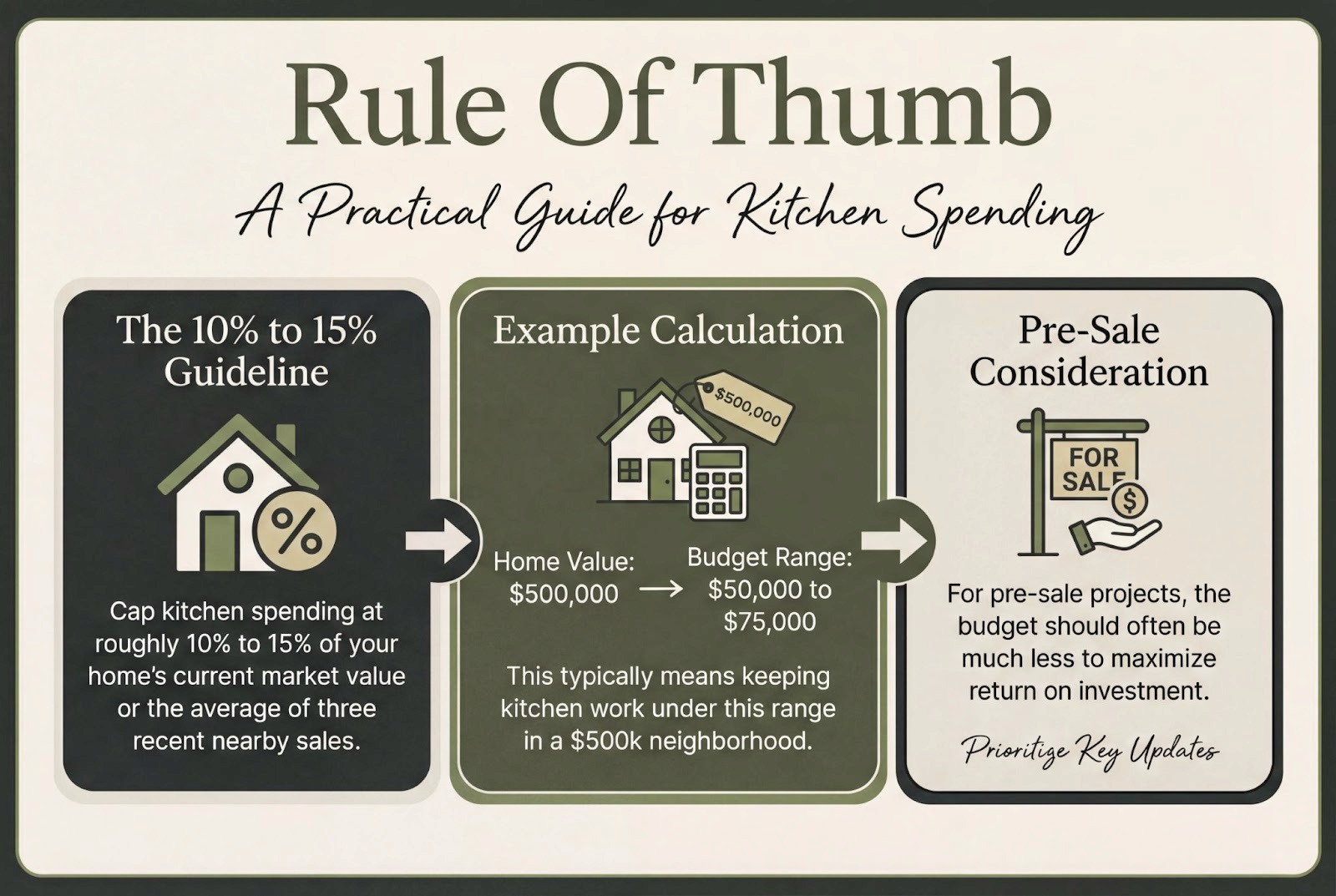
Look closely at what nearby homes offer. If most feature quartz countertops and shaker cabinets, matching that standard makes sense. Going beyond it with marble, custom appliances, or exotic materials usually does not pay off.
The Highest-ROI Kitchen Updates Before Selling
Sub-$2,000 Visual Wins
Some of the most effective updates cost surprisingly little:
Painting cabinets in neutral tones
Swapping outdated hardware
Installing a modern pull-down faucet
Updating light fixtures or adding under-cabinet lighting
These changes can dramatically shift first impressions without touching the structure.
Moderate Updates That Still Pay Off
When more improvement is needed, targeted upgrades often make sense:
Replacing worn countertops
Updating appliances selectively
Refreshing the backsplash
The key is restraint. Choose finishes that feel broadly appealing and durable rather than bold or personalized.
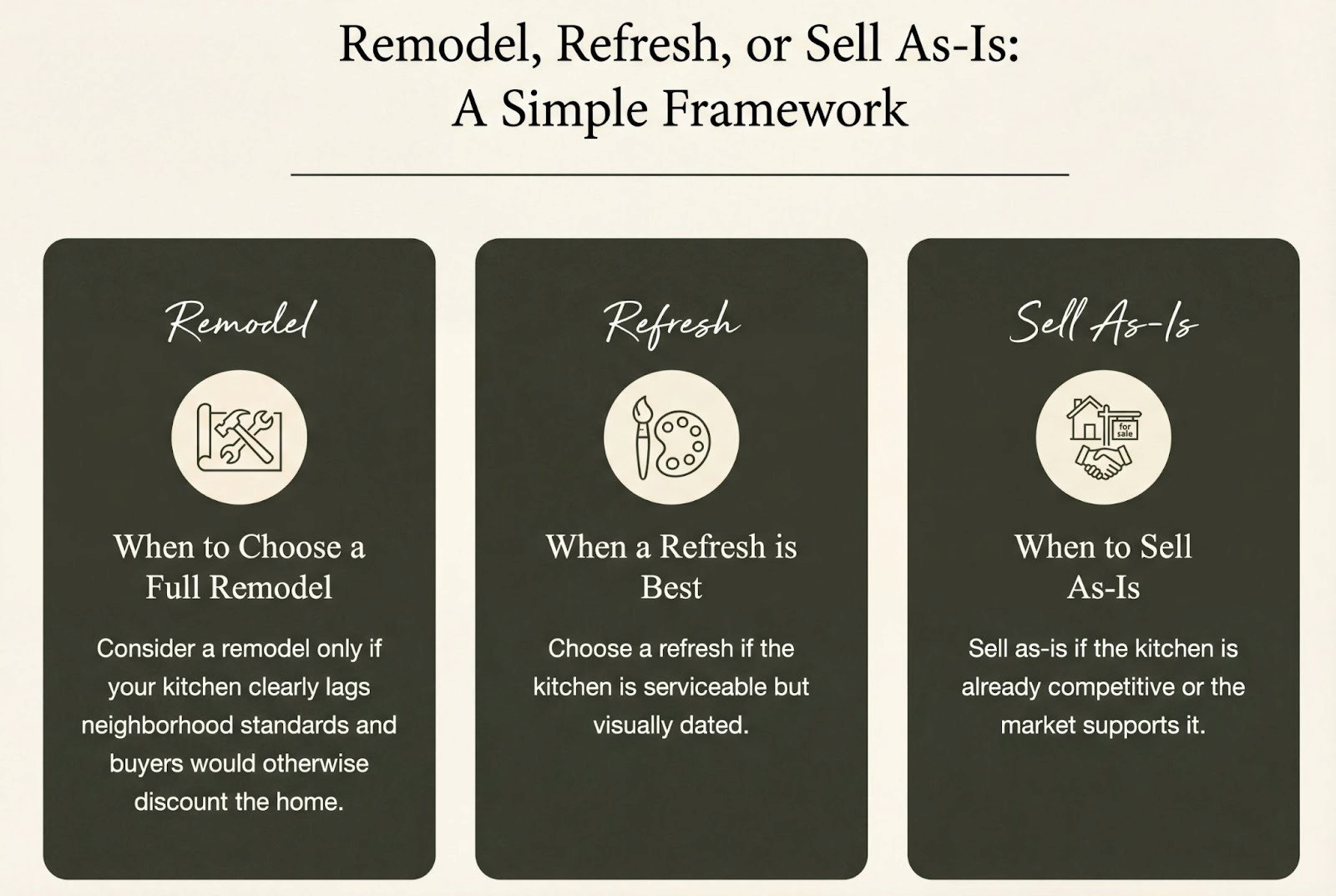
Remodel, Refresh, or Sell As-Is: A Simple Framework
Frequently Asked Questions
Will remodeling my kitchen help my home sell faster, even if ROI is not 100%?
Yes. Even when a remodel does not fully pay for itself, updated kitchens often reduce days on market by removing buyer hesitation and increasing offer confidence.
Should I offer a price reduction instead of remodeling the kitchen?
Sometimes. If the kitchen is dated but functional, a realistic price adjustment can attract buyers who want to renovate themselves without risking construction delays.
Do buyers prefer neutral kitchens or something more modern and bold?
Neutral wins before resale. Buyers respond best to kitchens that feel current but flexible, allowing them to picture their own style without undoing recent work.
Can I remodel just part of the kitchen before selling?
Yes. Strategic partial updates like countertops, lighting, or appliances often deliver strong visual impact without the cost or disruption of a full remodel.
Conclusion
So, should you remodel your kitchen before selling? The answer hinges on one thing: whether your current kitchen is actively costing you offers.
When a kitchen is clearly dated, functionally awkward, or falling behind nearby listings, buyers will discount your home hard and often without negotiating. In those cases, a well-scoped, market-appropriate remodel can protect your sale price and shorten time on market.
The mistake sellers make is not remodeling. It is remodeling too much, too late, or without anchoring the scope to local buyer expectations and resale math.
Book your free consultation to understand whether a remodel makes sense, what scope would be appropriate, and how to move forward without unnecessary design or construction spend.